As strength coaches, an athlete’s health should be the top priority. The role of a strength coach is to prepare athletes to play their sport and compete through strength and conditioning programs that are developed to elevate athleticism.
More importantly, a coach’s job is to help reduce injury both on and off the field. New York University Head Strength and Conditioning Coach and Assistant Athletic Trainer, Joe Mosher (M.Ed, ATC, CSCS, USAW) feels that:
“We have a duty to our athletes to provide them with a program that not only helps enhance their athleticism but also, and maybe more importantly, provides them with a higher level of injury resilience than they had before. I base everything on the idea that if my athletes are healthy and can compete, then they have at least some chance at winning, regardless of who we play. If they are injured and cannot compete then they have zero chance of winning. Even a one percent chance of winning is still better than a zero percent chance at winning.”
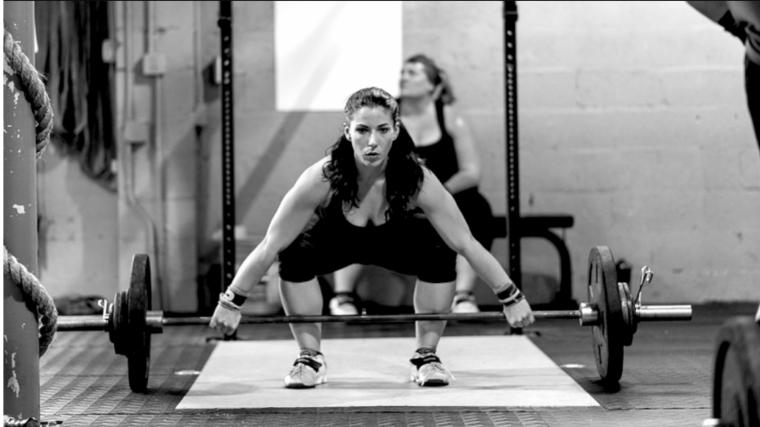
No matter how much stronger, bigger, and faster your athletes are compared to the opposition, if they aren’t healthy, they don’t play. Add these five exercises to your programming to give your athletes the best chance at staving off injuries and staying in the game.
Disclaimer: The content on Breaking Muscle is meant to be informative in nature, but it shouldn’t take the place of advice and/or supervision from a medical professional. While many of our contributors and experts have respected certifications and degrees, and while some are certified medical professionals, the opinions and articles on this site are not intended for use as diagnosis and/or treatment of health problems.
Eccentric Hamstring Slide
- What: Hamstring eccentric strength and posterior chain engagement.
- Why: Whether you are an athlete, runner, or fitness fanatic, your hamstring health plays a pivotal role in performance. The hamstrings are a critical component of force development for jumping, running, pulling, Olympic weightlifting, and strength training. Additionally, the hamstrings work to decelerate and absorb muscular force throughout the landing phases of the running/gait cycle and help to stabilize the knees and hips during open chained activity. Without proper hamstring health in both the concentric and eccentric phases of muscle actions, you could be leaving your athletes and clients open to nagging injuries, such as muscle pulls and strains and loss of training development.
- How: Perform this exercise either in the corrective or accessory segment of the workout. The key to doing these is to have controlled lengthening (eccentric) of the muscle, keeping tension and full range of motion (ROM) throughout the movement. Try adding these into your training regimen twice per week, for 2-4 sets of 10-20 controlled (2-3 second eccentric) reps.
90/90 Breathing
- What: This diaphragmatic breathing technique from the Postural Restoration Institute is great for teaching athletes and clients correct breathing and bracing during lifts and in life. Poor breathing techniques can create stiffness and pain in the neck, shoulders, pectoral muscles, lumbar, and anterior hip. This stiffness, combined with intense exercise, can lead to serious injury if left unnoticed.
- Why: The ability to brace and breathe through the diaphragm and abdominals is key to more stability and joint function in the hips, shoulders, and spine. By teaching athletes how to breathe under both non-stressful and stressful situations, they can improve performance and decrease the likelihood of injury during running, contact sports, overextended and rotational movements, and life.
- How: Perform this breathing protocol in the warm-up routine prior to resistance training. This exercise is a great way to mentally prepare athletes and clients to become more in tune with their breathing. More importantly, it gives them the core stabilization they need to perform optimally and safely.
X-Band Walk
- What: Glute activation, hip external rotation, and hip/knee/ankle stability.
- Why: Glute development is critical for hip health, which is a key player in deadlifts, squats, Olympic weightlifting, jumping, landing, and running, as well as power production and injury prevention. Additionally, the glutes stabilize the hip and knee joints, which tend to be susceptible to injury without adequate stability.
- How: Perform this movement either in the corrective or accessory segment of the workout. Depending on the band thickness and the position of the straps, the difficulty can be altered based on the athlete. The farther the bands are from the hip joint, the more resistance. Start with a few sets of 8-10 steps per leg, focusing on strong, controlled steps.
Marches and Skips
- What: Running, jumping, sprinting mechanics and leg drive technique.
- Why: The ability to create force is one thing, but most fitness enthusiasts and even some athletes fall short on the ability to apply maximal force using efficient movement mechanics. The result is decreased running speed, economy, wasting of energy, and an increased risk of potential injury. By understanding and engraining sound marches, skips, and running drills in warm-up sets and pre-competition drills, you can teach athletes to not only run faster, but also safer and more efficiently.
- How: Perform these drills in warm-up sets and/or pre-competition drills. It is imperative to teach the athletes to not allow knee extension as the leg drives upwards, and to maintain proper alignment of the base leg under the torso. Additionally, be sure to have the athlete actively pull the heel to the glutes with the hamstring, and drive his or her foot directly under the center of mass.
Arm Bar
- What: Scapular stabilization, rotator cuff stability, and shoulder awareness.
- Why: Whether you are a throwing athlete (baseball, football, softball, volleyball, tennis), weightlifter (snatches and jerks), or avid fitness enthusiast, scapular and shoulder stabilization are critical for optimal force development and injury prevention. The ability to anchor the posterior shoulder will increase the amount of force than can be controlled, decelerated, and ultimately produced at the shoulder joint. Additionally, Mosher states: “[T]he arm bar is a great shoulder disassociation exercise. It teaches the body to move around a stable shoulder. It also trains the rotator cuff in its first actual role of centering the joint as it moves through a full ROM. Lastly, it allows the athlete to develop thoracic mobility at the same time as teaching the shoulder joint to pack tight but still move independently.”
- How: Perform arm bars either in the corrective or accessory segment of the workout. The key to doing these is to have controlled stability of the shoulder as you turn your body. Make sure to keep the shoulder blades and abs tight, as you stay “stacked” through the upper/mid back. Try these out for 8-10 repetitions per arm, focusing on a brief pause at the top of each repetition.
The Proactive Approach
Take the time to address your athletes’ needs by including these fundamental exercises in their programming. This proactive approach will bulletproof your athletes from injury and keep them on the field and in the gym for years to come.
Learn more about injury prevention:
Programming for Injury Prevention: How to Keep Your Athletes Healthy
The post 5 Exercises to Help Athletes (Possibly) Prevent Injury appeared first on Breaking Muscle.
from Breaking Muscle https://ift.tt/3o5bIvc
via IFTTT
Comments
Post a Comment