It is entirely possible to train for the sport of weightlifting on a solitary basis. Many have done it this way, and no doubt many will continue to do so. It is also possible to be coached on a one-on-one or even online basis. However, this is not to say that individualized, solitary training is the optimal way to learn and train for the sport.
On the other hand, there are some severe limitations to the traditional model of group class instruction that do not lend themselves to holding an effective “weightlifting class.” In a typical group exercise class, the instructor leads the activities by designating the nature of the activity and providing parameters to standardize the activity. There is a short lifespan under which this type of instructional model can prevail for a group of different levels and abilities. Even teaching the most basic exercises for weightlifting will exceed the limitations of the group class model.
Know When to Individualize
So when is individualization necessary? The short answer is it’s necessary whenever it’s necessary. The goal of the coach is to make the athlete as efficient as possible. If over the course of a 10-year weightlifting career, the athlete’s body changes (and it will), then technique will have to undergo slight modifications, and the training will have to be suited to the specifics of the athlete’s training condition.
Furthermore, that same body will have to train differently depending on the point within the macrocycle, and this will require individual modifications. Although the movements being learned are the same, they will have to be modified to suit the specific body proportions and movement patterns of each individual. This means the coach will have to make specific adjustments.
On other occasions, a group made up of individuals with equal capacities who started at approximately the same time may have to modify certain aspects of the same training program. This requires the coach to do some individualization, which may include dropping or adding a set, eliminating or adding an exercise, adding repetitions on certain sets, or changing the number of sets performed in a specific intensity zone. To make these individualized modifications, the coach must have a deep working knowledge of the medium and a vision for the eventual goal of the training.
Group Training Has Its Place
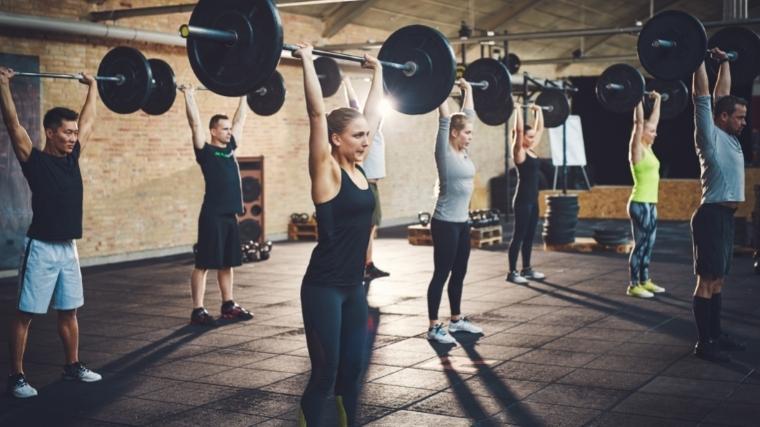
Personally, during the sessions I host, we have 10 or more athletes training simultaneously on three different programs that vary according to each lifter’s abilities.

There is great energy in the room, as many of the athletes are trying to do well on the same training program and are anxious to see how others are doing. The energy is helpful. The lifters encourage each other, reinforce the culture of the sport, generate enthusiasm for upcoming competitions, and share common knowledge that lies beyond the training advice that I dispense as the coach.
The group also maintains a common pace that keeps the training active and inhibits lagging. For the less accomplished, there are role models to observe and performance models to mimic. Each team member is reinforced by the others. Performing such demanding training on a solitary basis will not last as long as is necessary to benefit from rigorous training.
Final Word
The conclusion here is that training must be individualized for it to be most effective, but must be performed in a group setting that encourages full participation and maintains enthusiasm. As a coach I’ve found this to be true in a wide variety of venues around the world. It is the most productive way to organize a team of lifters to achieve their highest potential.
You must coach individually in a group.
Featured Image: Flamingo Images/Shutterstock
The post The Right Way to Approach Group Training for Optimal Results appeared first on Breaking Muscle.
from Breaking Muscle https://ift.tt/RpgFal3
via IFTTT
Comments
Post a Comment